
 Save to Pinterest
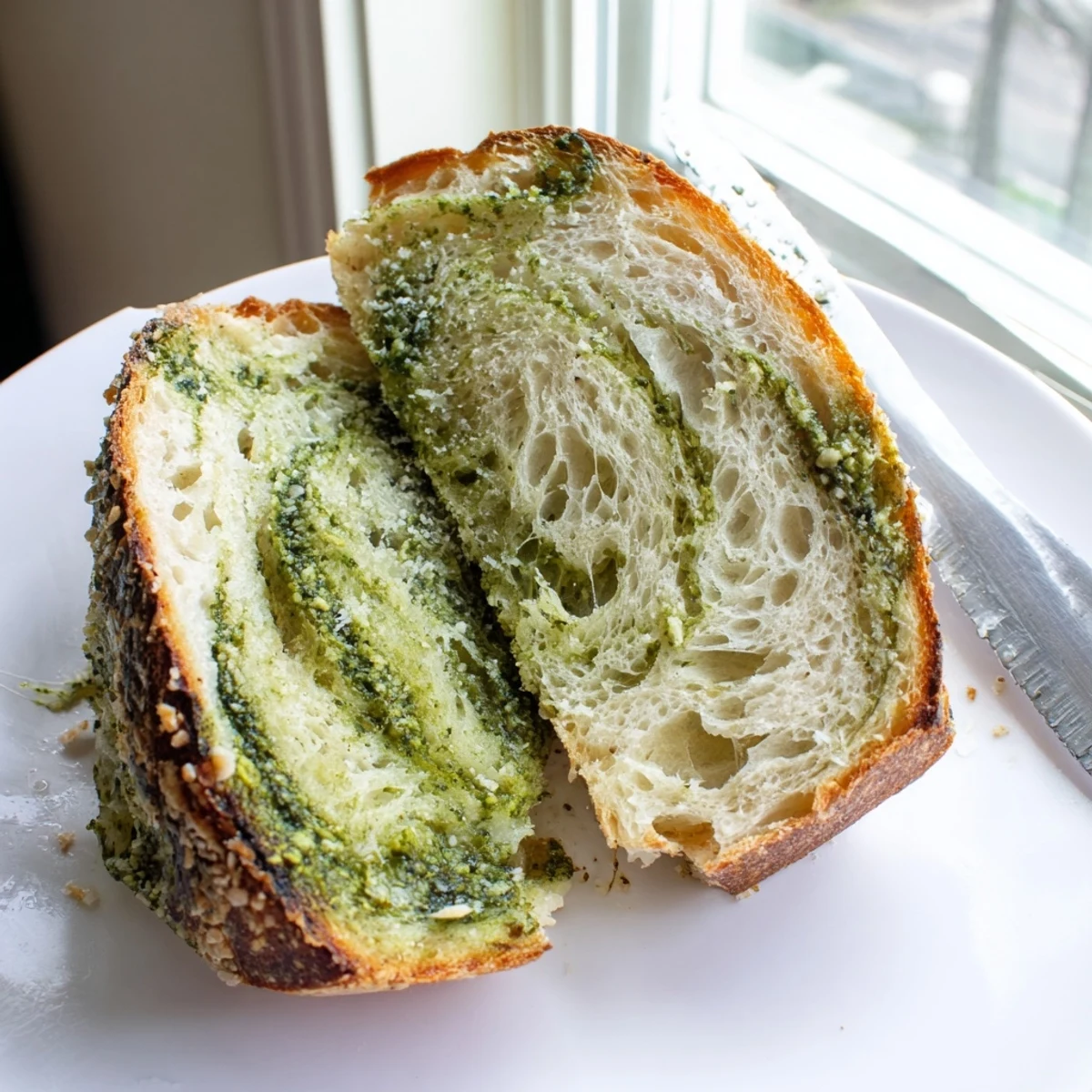
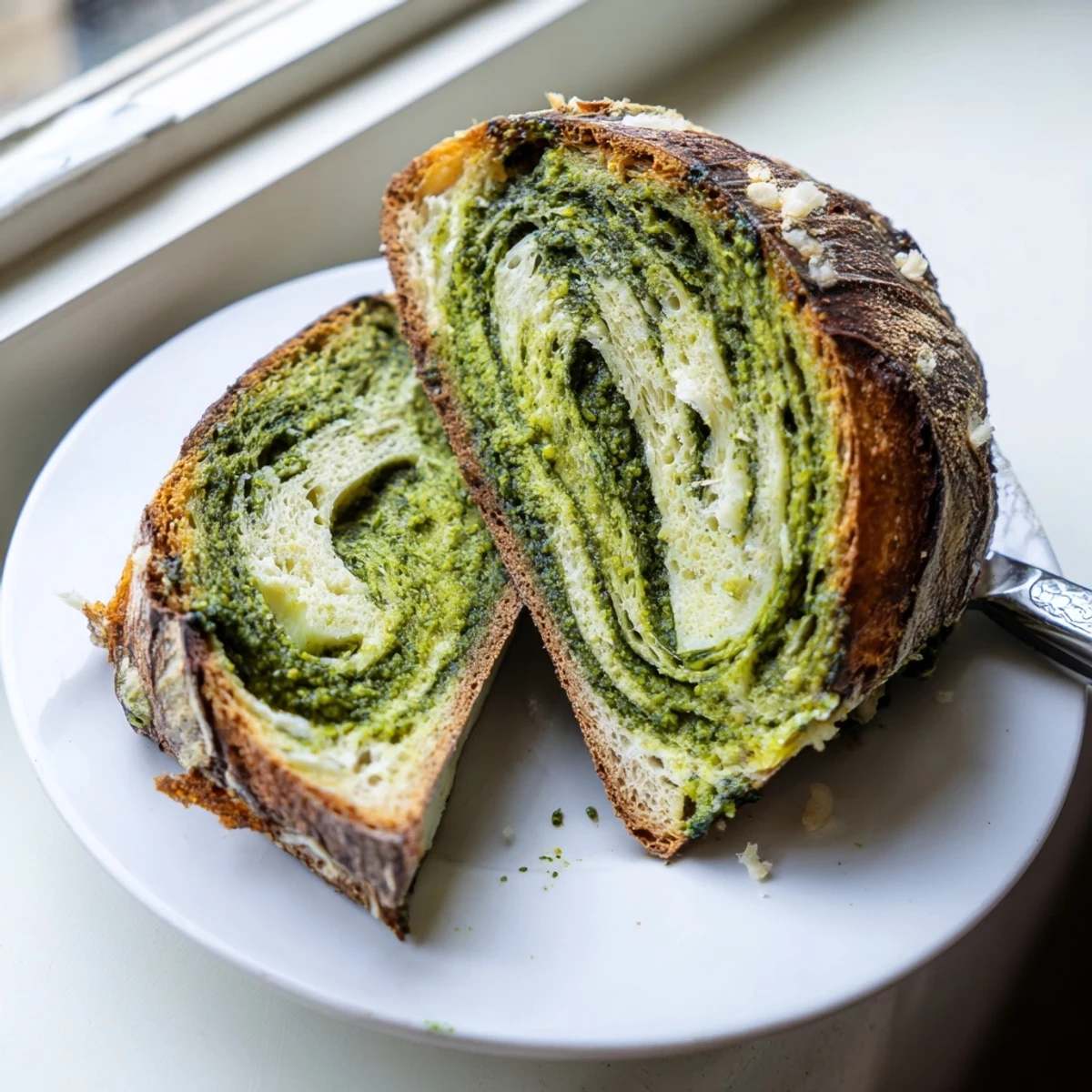
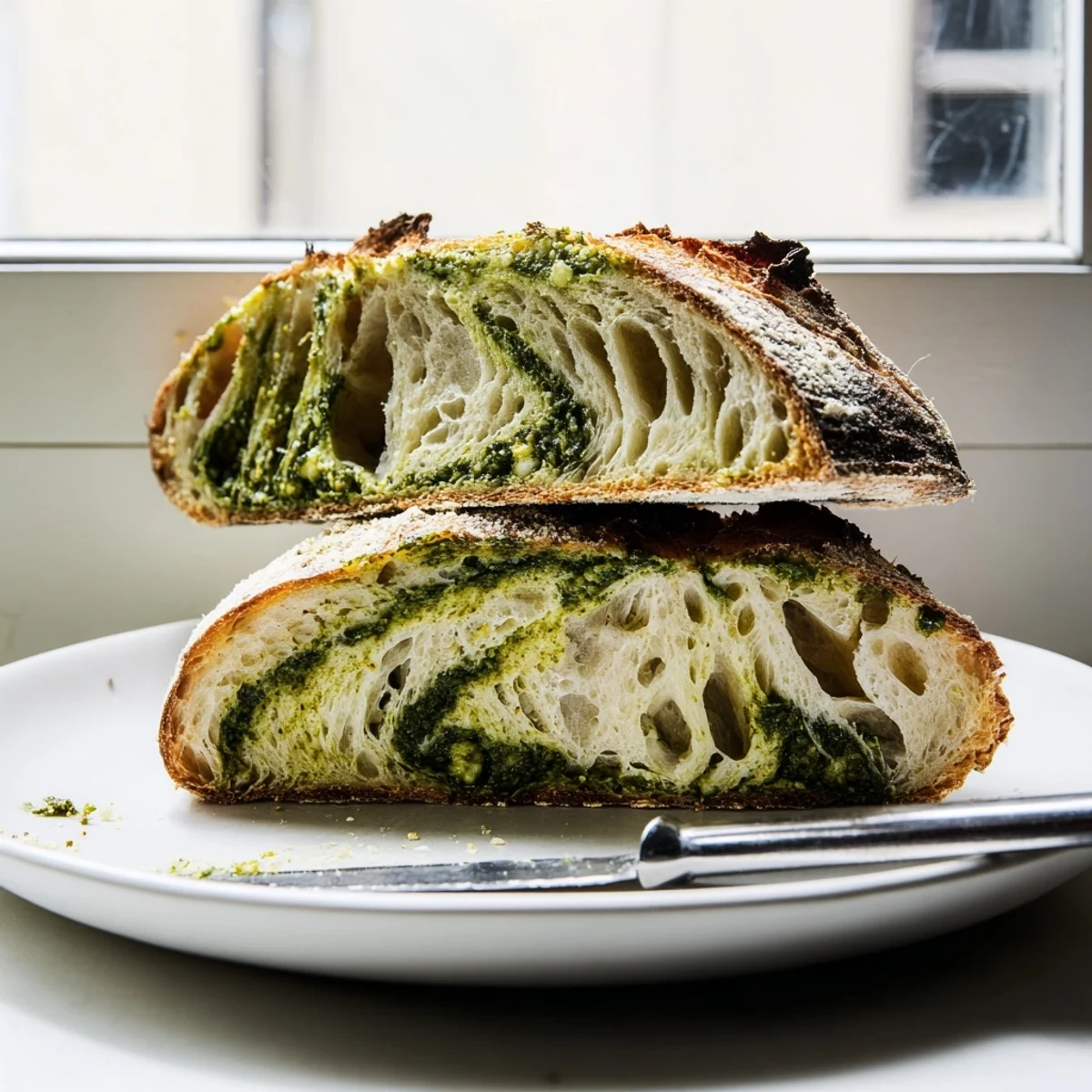
 This artisan sourdough combines traditional fermentation techniques with Italian flavors. The dough undergoes an autolyse rest period and four rounds of stretch-and-folds to develop strength and structure. Fresh basil pesto gets spread across the surface before rolling, creating beautiful green swirls throughout the crumb. A generous topping of aged Parmesan creates a salty, golden crust that bakes up beautifully crisp.
The process requires active sourdough starter at 100% hydration and takes 6-9 hours from start to finish, including rising time. Baking in a preheated Dutch oven creates the ideal steam environment for a crackly, professional-quality crust. The result is a visually stunning loaf with complex tangy, herbal, and savory notes perfect for dipping, sandwiches, or serving alongside Italian meals.
The first time I made pesto bread, my tiny apartment smelled like an Italian grandmother had moved in for the weekend. I had no idea basil and sourdough could become best friends until that first golden crust emerged from my Dutch oven. Now my neighbors know when I am baking because the aroma drifts into the hallway and knocks on their doors too.
Last summer I served this at a casual dinner party and watched my friend literally eat three slices standing up by the counter. She claimed she was just tasting but I know better now. The way the melted Parmesan gets all crispy and golden on top makes people forget their manners completely.
Ingredients
- 500 g bread flour: Higher protein content gives you that beautiful open crumb structure and chewy texture we all love
- 350 ml lukewarm water: Warm water wakes up your starter and helps everything mingle together happily
- 100 g active sourdough starter: Make sure it is bubbling and doubled before you start or your bread will be sad and dense
- 10 g fine sea salt: Do not skip this or you will end up with bland bread that tastes like disappointment
- 70 g basil pesto: Homemade is divine but a good jarred pesto works perfectly when you are short on time
- 50 g freshly grated Parmesan cheese: Freshly grated melts better and gives you those crispy cheese dreams on top
- 1 tbsp olive oil: Helps that Parmesan stick around and become golden brown and gorgeous
Instructions
- Start your dough adventure:
- Mix the flour and water in a large bowl until just combined then cover and let it rest for 30 to 45 minutes. This autolyse period gives the flour time to hydrate properly which makes everything easier later.
- Bring it together:
- Add your active starter and salt to the bowl then mix until everything is well incorporated. The dough will feel shaggy at first but trust the process.
- Build some strength:
- Perform stretch and folds every 30 minutes for 2 hours doing a total of 4 sets. Grab one edge of the dough stretch it up and fold it over the center repeating around the bowl.
- Let it rest:
- Cover the dough and let it relax at room temperature for 1 hour after your final fold. This gives the gluten a chance to relax before shaping.
- Prepare for the magic:
- Turn the dough onto a lightly floured surface and gently stretch it into a rough rectangle. Do not be too aggressive here or you will lose all those beautiful bubbles.
- Add the flavor:
- Spread your pesto evenly over the dough leaving about a 2 cm border around the edges. Sprinkle 40 g of the Parmesan right on top of the pesto.
- Roll it up:
- Starting from the short end roll the dough into a tight log then shape it into a round or batard depending on your mood. The pesto will create those gorgeous swirls inside.
- Final rise:
- Place your dough seam side up into a well floured banneton or bowl lined with a floured towel. Cover and let it rise for 2 to 3 hours or pop it in the fridge overnight for extra flavor.
- Get ready to bake:
- Preheat your oven to 230°C with your Dutch oven inside so it gets screaming hot. This step is crucial for that impressive oven spring.
- The finishing touches:
- Turn the dough onto parchment paper brush the top with olive oil and sprinkle with the remaining Parmesan. Score with a sharp knife or lame if you want that professional look.
- Bake to perfection:
- Bake covered for 20 minutes then remove the lid and bake another 18 to 20 minutes until deeply golden. The cheese on top should be crispy and fragrant.
- Patiently wait:
- Cool completely on a wire rack before slicing or you will end up with a gummy crumb. This is the hardest part but worth every minute of anticipation.
 Save to Pinterest
 This bread has become my go to when I want to impress someone without actually trying that hard. My sister now requests it every time she visits and has started calling me the bread lady which I am secretly pretty proud of honestly.
Flavor Variations
Sun dried tomato pesto creates this gorgeous red swirl throughout the bread and adds a sweet tangy flavor that pairs beautifully with the sourdough. Walnut pesto adds this earthy richness that feels especially cozy in colder months when you want something hearty and comforting.
Serving Ideas
This bread makes the most incredible grilled cheese sandwiches you have ever tasted. I also love serving it alongside soups and stews where the pesto flavor really shines through. Set it out with some good olive oil and balsamic for dipping and watch it disappear.
Storage Tips
Store this bread in a paper bag at room temperature for up to 2 days because plastic will make the crust soggy which is tragic. After that slice it up and freeze the pieces then toast straight from frozen. The pesto flavor actually holds up beautifully in the freezer.
- Wrap slices individually in parchment before freezing for easy grab and go toasting
- Revive slightly stale bread by sprinkling with water and reheating at 180°C for 10 minutes
- Day old bread makes amazing croutons for your next Caesar salad
 Save to Pinterest
 There is something so satisfying about pulling a warm cheesy pesto swirled loaf out of the oven. I hope this recipe brings as much joy to your kitchen as it has to mine.
Recipe FAQs
- → What makes this sourdough different from regular bread?
-
The combination of naturally fermented dough with Italian basil pesto creates distinctive green swirls throughout the crumb. The sourdough starter provides characteristic tanginess and improved digestibility, while the Parmesan topping forms a crispy, golden crust. This artisanal approach yields deeper flavor complexity compared to commercial yeast breads.
- → Can I use store-bought pesto?
-
Yes, store-bought basil pesto works perfectly fine. Look for brands with high-quality olive oil and fresh basil flavor. You can also substitute sun-dried tomato pesto or walnut pesto for different flavor profiles. Homemade pesto allows you to control the consistency and garlic intensity to your preference.
- → How do I know when my starter is ready to use?
-
Your starter should be at 100% hydration and actively bubbling. Feed it 8-12 hours before mixing your dough. A ready starter will have doubled in volume, show plenty of surface bubbles, and pass the float test—a small spoonful should float in water. If it's been refrigerated, let it come to room temperature and feed once before using.
- → Why do I need a Dutch oven?
-
A preheated Dutch oven creates the ideal steam environment for baking artisan sourdough. The trapped steam keeps the crust soft initially, allowing maximum oven spring for a tall, airy loaf. As baking continues, the moisture evaporates and the crust develops its characteristic crackly texture. A baking stone with a metal bowl cover works as an alternative.
- → Can I skip the overnight refrigeration?
-
Absolutely. After shaping, you can let the dough rise at room temperature for 2-3 hours until it passes the poke test. Refrigeration develops deeper flavor and makes the dough easier to handle, plus gives you scheduling flexibility. If refrigerating overnight, let the dough warm slightly at room temperature before baking.
- → What's the best way to store this loaf?
-
Store at room temperature in a paper bag or wrapped in a clean kitchen towel for 2-3 days. Avoid plastic bags which make the crust soft. For longer storage, slice and freeze in freezer bags, then thaw individual slices as needed. The Parmesan topping may soften slightly at room temperature but crisps up again when briefly toasted.