
 Save to Pinterest
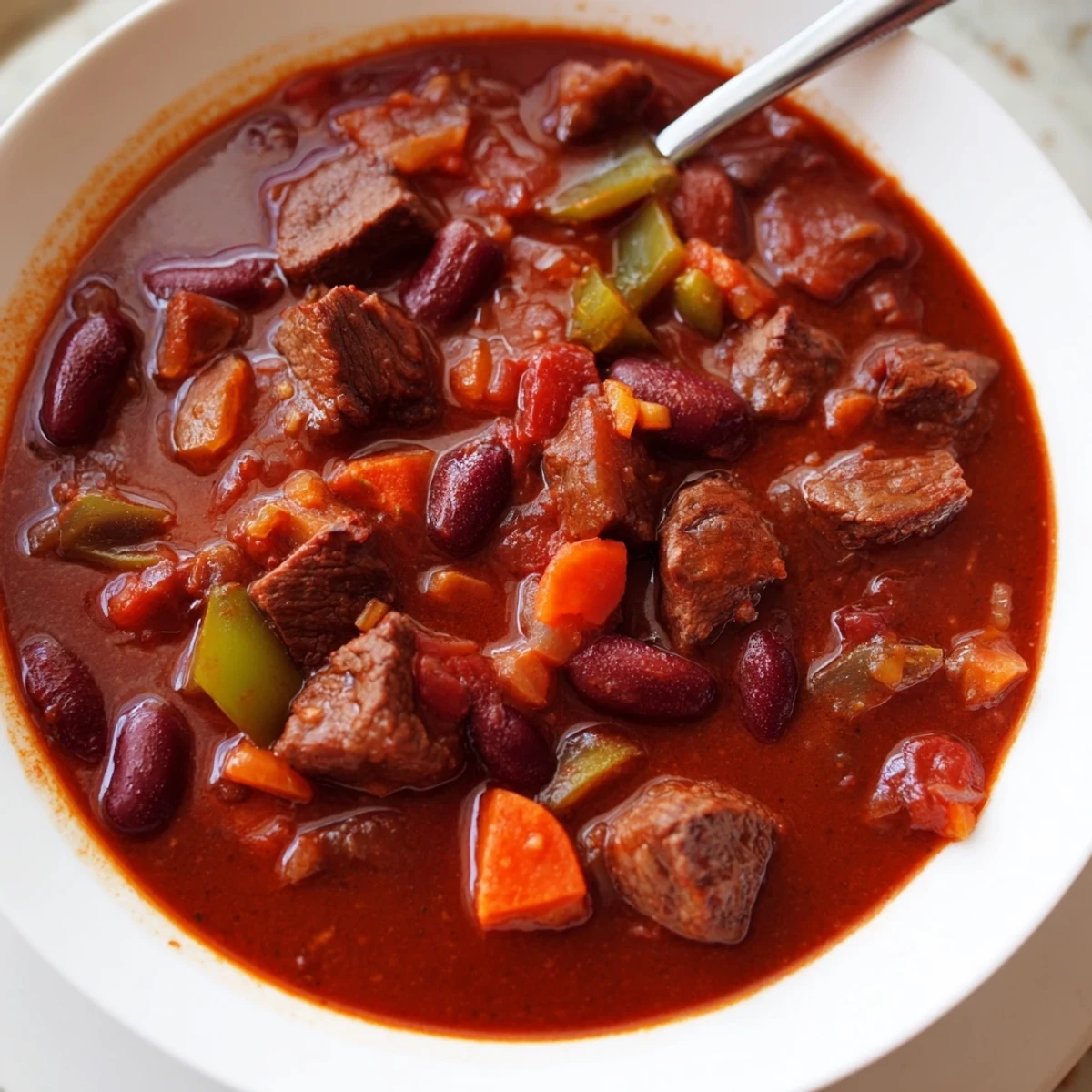
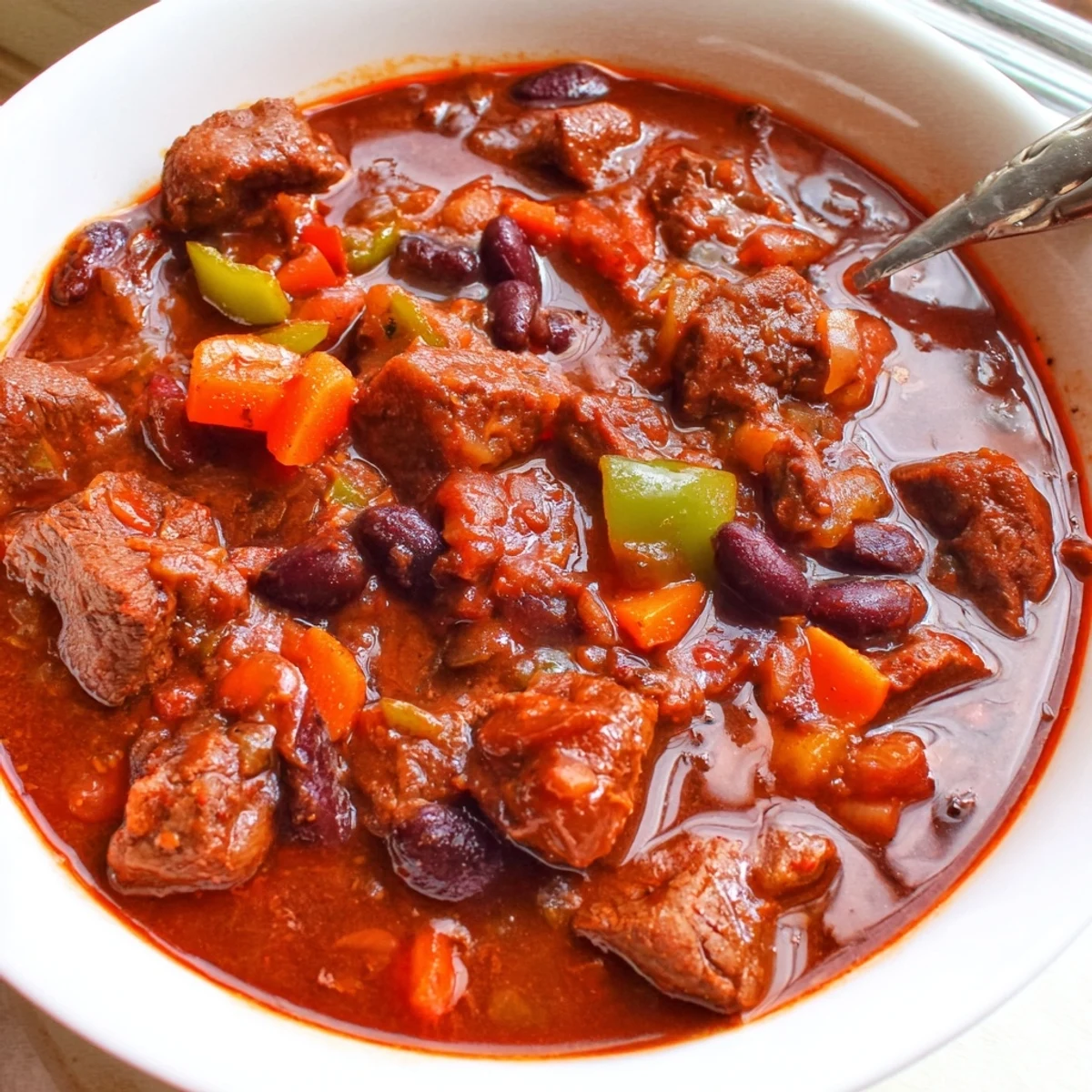
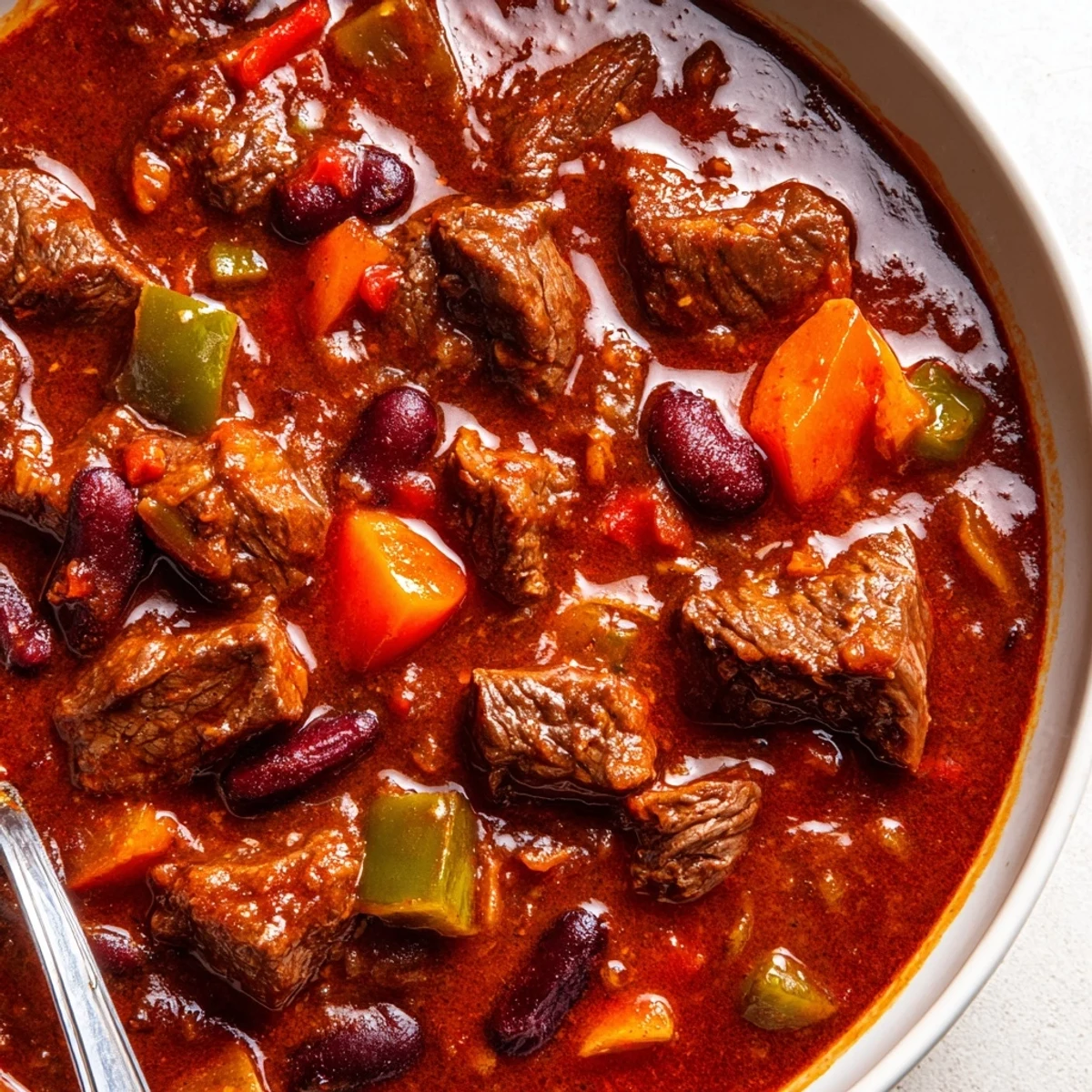
 This beefy chili stew brings together tender chunks of chuck roast, hearty kidney and black beans, and a medley of vegetables in a deeply spiced chili broth.
Browning the beef first builds a rich foundation of flavor, while a slow simmer ensures every bite is melt-in-your-mouth tender.
Chili powder, cumin, and smoked paprika create layers of warmth without overwhelming heat, making this a crowd-pleasing dish for any night of the week.
The rain was hammering against the kitchen window so hard that Tuesday night that I could barely hear the stove fan, which honestly was fine because I had already decided the world outside could wait. A pot of this beefy chili stew was bubbling away on the burner, filling every corner of the apartment with something deep and peppery that made the dog lift his head off his paws and stare at me like I owed him a bowl. That was the evening I realized a good stew is really just an excuse to stand still and stir while everything else falls apart.
My neighbor Dave knocked on the door halfway through the simmer, claiming he smelled something from the hallway and wanted to know if everything was okay, and forty minutes later he was sitting at my counter with a ladle in his hand telling me about his childhood in El Paso. I learned that night that chili stew is a conversation starter whether you intend it to be or not. He brought over a six pack the following weekend and asked if we could make it again, which is honestly the highest compliment I have ever received in a kitchen.
Ingredients
- 2 lbs beef chuck, cut into 1-inch cubes: Chuck is the right cut here because the fat renders slowly and keeps everything tender, so do not be tempted to swap in something leaner.
- 1 large onion, chopped: A regular yellow onion gives the sweet base that balances the chili powder without fighting it.
- 1 green bell pepper, diced: Dice it small so it melts into the stew rather than floating around in recognizable chunks.
- 2 cloves garlic, minced: Fresh garlic only, and add it after the other vegetables have softened so it does not scorch and turn bitter.
- 2 carrots, sliced: They add a quiet sweetness that most people will not pinpoint but would absolutely miss if you left them out.
- 1 can diced tomatoes (14 oz): The acidity cuts through the richness of the beef and gives the broth its reddish color.
- 1 can kidney beans (15 oz), drained and rinsed: Rinsing removes the starchy liquid that can make the broth cloudy.
- 1 can black beans (15 oz), drained and rinsed: Black beans break down slightly more than kidney beans, which helps thicken everything beautifully.
- 3 tbsp chili powder: This sounds like a lot but it is the backbone of the entire flavor profile, so trust the measurement.
- 1 tsp ground cumin: Cumin adds an earthy warmth that rounds out the sharper edges of the chili powder.
- 1/2 tsp smoked paprika: Just a touch gives the illusion that you cooked this over an open fire even if your stove is electric.
- 1/4 tsp cayenne pepper (optional): Add it if you like a slow burn at the back of your throat, skip it if you are feeding kids.
- Salt and pepper to taste: Season the beef before browning and again at the end, because layered salt always works better than dumping it all in at once.
- 4 cups beef broth: Low sodium gives you more control over the final seasoning.
- 2 tbsp tomato paste: Bloom it with the spices for two minutes and it will taste like you spent twice as long cooking.
- 2 tbsp olive oil: Just enough to get a good sear on the beef without the pot smoking up your kitchen.
Instructions
- Get a hard sear on the beef:
- Heat the olive oil in a large Dutch oven over medium high heat until it shimmers, then add the beef cubes in a single layer without crowding the pot. Let them sit undisturbed for at least two minutes per side until you get a deep brown crust, then remove and set aside while you build the rest of the stew.
- Soften the vegetables:
- Toss the onion, bell pepper, carrots, and garlic into the same pot with all those rendered beef drippings and stir occasionally for about five minutes until everything has softened and the kitchen smells like you know what you are doing.
- Bloom the spices:
- Stir in the tomato paste, chili powder, cumin, smoked paprika, cayenne if you are using it, and a generous pinch of salt and pepper. Keep it moving for two minutes until the paste darkens and the spices smell toasty and intensely fragrant.
- Bring it all together:
- Return the browned beef to the pot, pour in the diced tomatoes and beef broth, and stir to combine everything. Bring it to a simmer and watch the surface start to gently bubble before you move to the next step.
- Let time do the work:
- Reduce the heat to low, cover the pot, and walk away for about an hour, stirring once or twice just to make sure nothing is sticking to the bottom. This is when the beef goes from chewy to fork tender and the whole house starts to smell unreasonable.
- Add the beans and finish strong:
- Stir in both cans of rinsed beans and continue simmering uncovered for twenty to thirty minutes until the broth has reduced and thickened enough to coat the back of a spoon. Taste it now and add more salt or chili powder if it needs a final push.
- Serve it up:
- Ladle it into wide bowls while it is still steaming and top with whatever you like, whether that means a dollop of sour cream, a handful of shredded cheese, or a scatter of fresh cilantro.
 Save to Pinterest
 There is something about ladling stew into a bowl for someone who showed up at your door uninvited that makes the whole cooking process feel worth every minute of stirring and waiting. It stops being dinner and becomes the thing that made everyone sit down together and stop checking their phones.
Why Chuck Makes All the Difference
I tried making this once with sirloin because it was on sale and I was feeling clever, and the result was perfectly fine but completely unremarkable, like a poem with the adjectives removed. Chuck has the marbling and connective tissue that slowly melt into the broth during the long simmer, creating richness that leaner cuts simply cannot deliver. You want those white streaks running through the raw meat because they are the difference between a stew you eat and a stew you remember. Pay the extra dollar per pound and thank yourself later.
Making It Your Own
The beauty of a stew like this is that it tolerates improvisation beautifully, which means you can swap vegetables based on what is wilting in your crisper drawer or add smoked sausage alongside the beef if you want something even heartier. I have thrown in leftover corn, diced sweet potatoes, and even a handful of chopped kale at the end, and somehow the pot always forgives me. The spice ratios are where I would encourage restraint on your first attempt, because you can always add more heat but you cannot take it away once the cayenne has made its presence known.
Storage and Leftovers
This stew is one of those rare dishes that genuinely improves overnight as the flavors settle and mingle in the fridge, so always make the full batch even if you are only feeding three people. Let it cool completely before transferring it to airtight containers and it will keep for four days in the refrigerator or freeze beautifully for up to two months. Reheat it gently on the stove with a splash of broth to loosen it back up.
- Freeze individual portions in quart sized bags laid flat so they stack neatly in the freezer.
- Label the bags with the date because two months from now you will not remember what is in there.
- Add a splash of water or broth when reheating because the broth will have thickened considerably in the cold.
 Save to Pinterest
 Some nights you just need a big pot of something on the stove and an excuse to stand near it, and this stew has never once let me down on either count. Make it once and it will become the thing you reach for every time the weather turns or the week feels too long.
Recipe FAQs
- → What cut of beef works best for this stew?
-
Beef chuck is ideal because it becomes fork-tender during the long simmer. You can also use beef round or stew meat, but chuck delivers the best flavor and texture.
- → Can I make this stew in a slow cooker?
-
Yes. Brown the beef and sauté the vegetables first, then transfer everything to a slow cooker. Cook on low for 6-8 hours or on high for 4-5 hours until the beef is tender.
- → How do I adjust the spice level?
-
Reduce or omit the cayenne pepper for a milder stew. For more heat, add extra cayenne or a diced jalapeño during the sauté step. You can always add heat but can't take it away.
- → Can I freeze leftovers?
-
Absolutely. Let the stew cool completely, then portion into airtight containers. It freezes well for up to 2 months. Thaw overnight in the refrigerator and reheat on the stovetop.
- → What should I serve with beefy chili stew?
-
Crusty bread, cornbread, or steamed rice all pair beautifully. Top individual bowls with sour cream, shredded cheese, chopped cilantro, or sliced green onions for extra flavor.